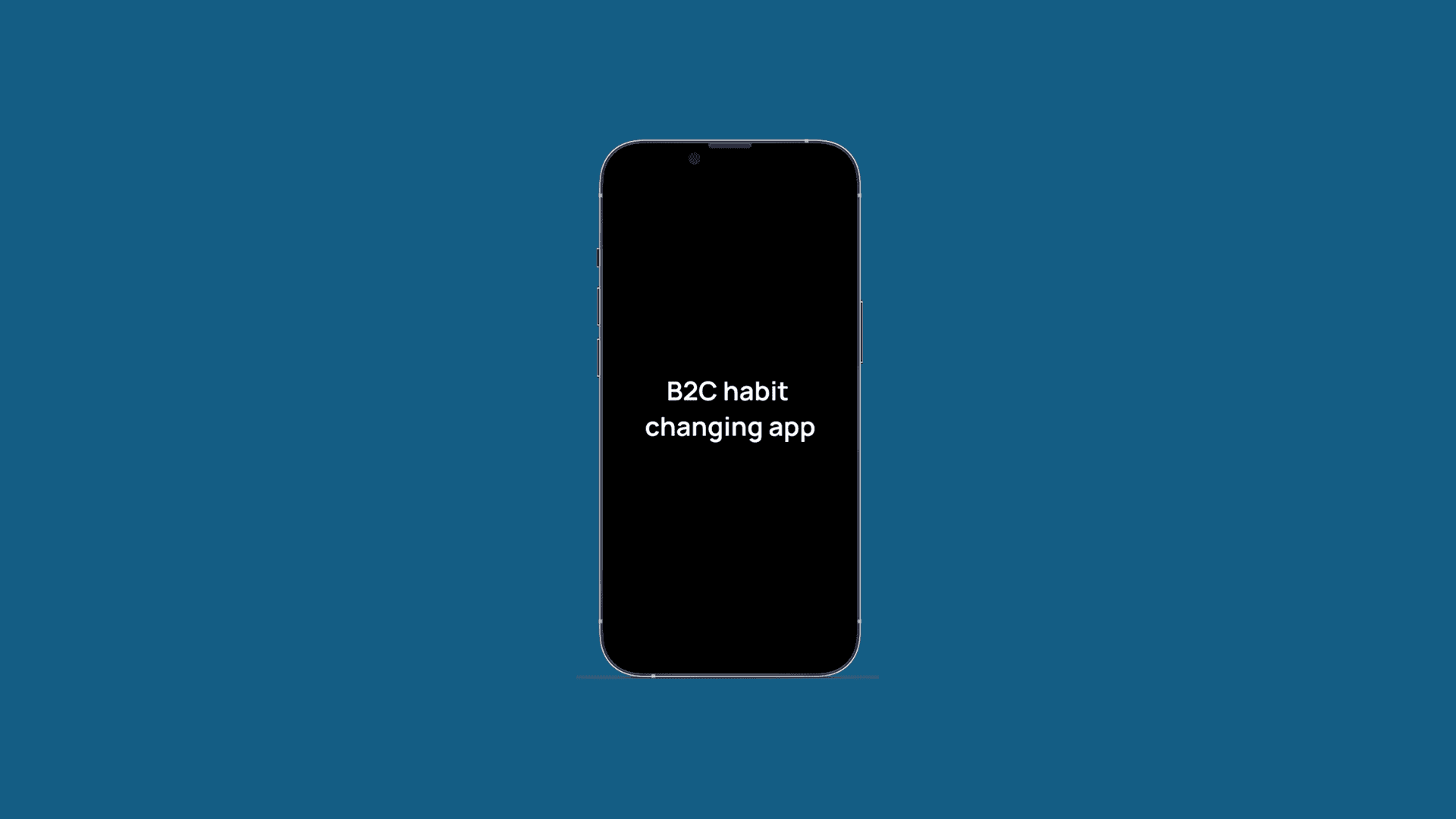
A B2C habit-changing app
Less screentime, more pauses
00
problem
The digital wellness space is growing rapidly, but most screen-time solutions rely solely on software nudges — notifications, usage dashboards, app timers. The product combined a proprietary hardware device with a companion iOS app, targeting end users seeking more mindful relationships with their devices. When the project began, the client had a branding guide and a product idea — no design system, no documented requirements, no pricing structure, and no handoff process. Discovery had to establish all of this in a compressed timeline before delivery could build anything.
solution
The product problems were clear from early discovery: users struggle to break phone habits using willpower alone, and existing digital tools reinforce the same screen-based behavior they're trying to interrupt. The app needed to feel like a companion to the physical object, not a standalone feature set. Internally, we identified a second layer of problems that threatened delivery quality: there was no structured onboarding for new team members joining the project mid-flight, like new QAs and engineers, and we wanted to improve our specification documentation to improve delivery.
During the discovery phase, I participated in the validation of the product's core premises alongside the team. My role included a market competitive benchmarking of existing apps and hardware solutions, and a review of potential monetization models for a phygital B2C product.
year
2026
timeframe
35 days
tools
Jira, Miro, Figma, Slack, Google Workspace
category
Product Design & Business Analysis